The Belledune Port Authority (BPA) is advancing a phased marine terminal expansion that will establish the Port of Belledune as a strategic Canadian transportation and logistics hub for critical minerals, northern mine supply, liquid bulk products, and international trade.
The project supports Canada’s objectives of strengthening national supply chains, increasing transportation resilience, and diversifying trade beyond US markets.
Cost estimate status
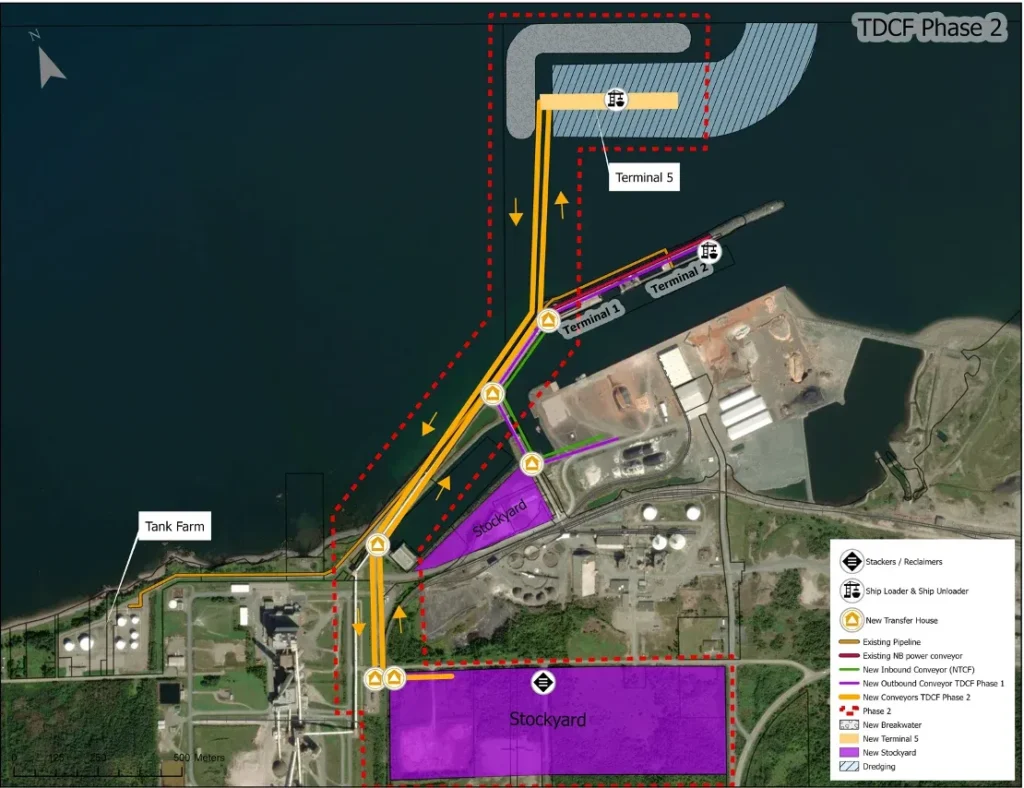
Phase 2 involves the development of a new deepwater transshipment terminal capable of accommodating Baby Capesize and Capesize vessels ranging from 120,000 to 180,000 DWT, creating the only facility of its kind on Canada’s east coast.
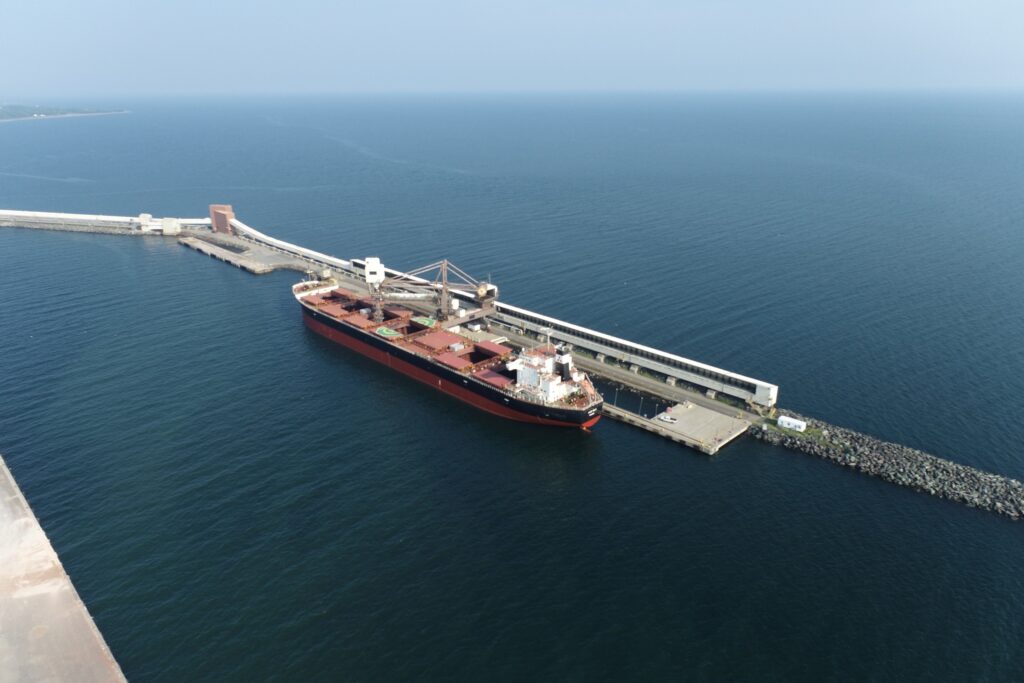
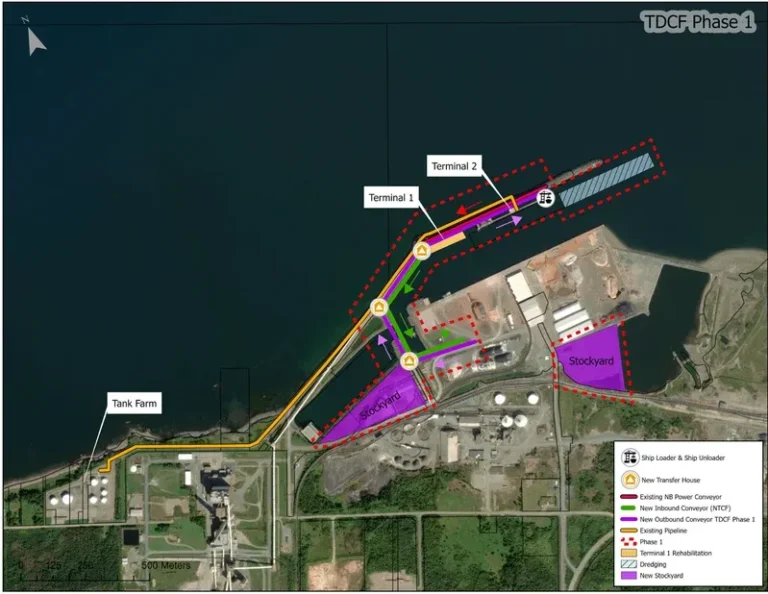
The first phase of this project focuses on enhancing BPA’s deepest berth, Terminal 2, where an existing conveyor system is currently being enhanced.
| CAPEX | $347M |
| Primary objective | Enhance near-term import/export and transshipment capability at Terminal 2 |
| Core works | Parallel reverse-flow conveyor; dredging; Terminal 1 foundational work; 5,000 t/hr shiploader; two 2,500 t/hr ship unloaders; mobile stockyard equipment; added storage |
| Vessel capability | Fully laden Panamax or partially laden Baby Capesize vessels, up to approximately 130,000 MT |
| Incremental throughput | Increase throughput of 148% from 2025 to 2032 |
| Timing | Design and approvals begin in 2026; commissioning is targeted around early 2029, with project close-out extending into 2029 |
| Strategic role | Create near-term operating utility and incremental commercial capacity while establishing infrastructure that supports the future Terminal 5 build |
Phase 2 involves the development of a new deepwater transshipment terminal capable of accommodating Baby Capesize and Capesize vessels ranging from 120,000 to 180,000 DWT, creating the only facility of its kind on Canada’s east coast.
| Primary objective | Create dedicated deepwater transshipment capacity for critical minerals and other strategic bulk commodities |
| Core works | New breakwater; approximately 400 m wharf; approximately 600 m access trestle; dredging; four stockpiles; conveyors; two stacker- reclaimers; shiploader; two ship unloaders |
| Vessel capability | Capesize at the north berth; Panamax or Baby Capesize at the south berth; design range cited at 120,000-180,000 DWT |
| Commercial throughput case | 7 MT/year base case used for project economics; 12 MT/year upside case Increase in throughput of 498% from 2025 to 2038 |
| Timing | Design and approvals from 2026 through the late 2020s; major construction concentrated in 2030-2032; commissioning targeted around early 2033 |
| Long-term role | Establish a full-scale Atlantic transshipment hub and platform for future value-added industrial development |